Last week I sat in a workshop and watched a slide that named something I have been circling for years.
Tinker (verb): to explore by trying, making, noticing, changing, and trying again.
That is the whole definition. Not a makerspace. Not a 3D printer. Not a special period on Friday. A loop: I do something. I build, create, or experiment. I see what happens. I make a new plan. I keep going.
On the table was a Tinker Tote—a clear bag of mixed materials and an implicit invitation. Same stuff. Different thinking. That line is the heart of it. The tote is just a container. The thinking is the work.
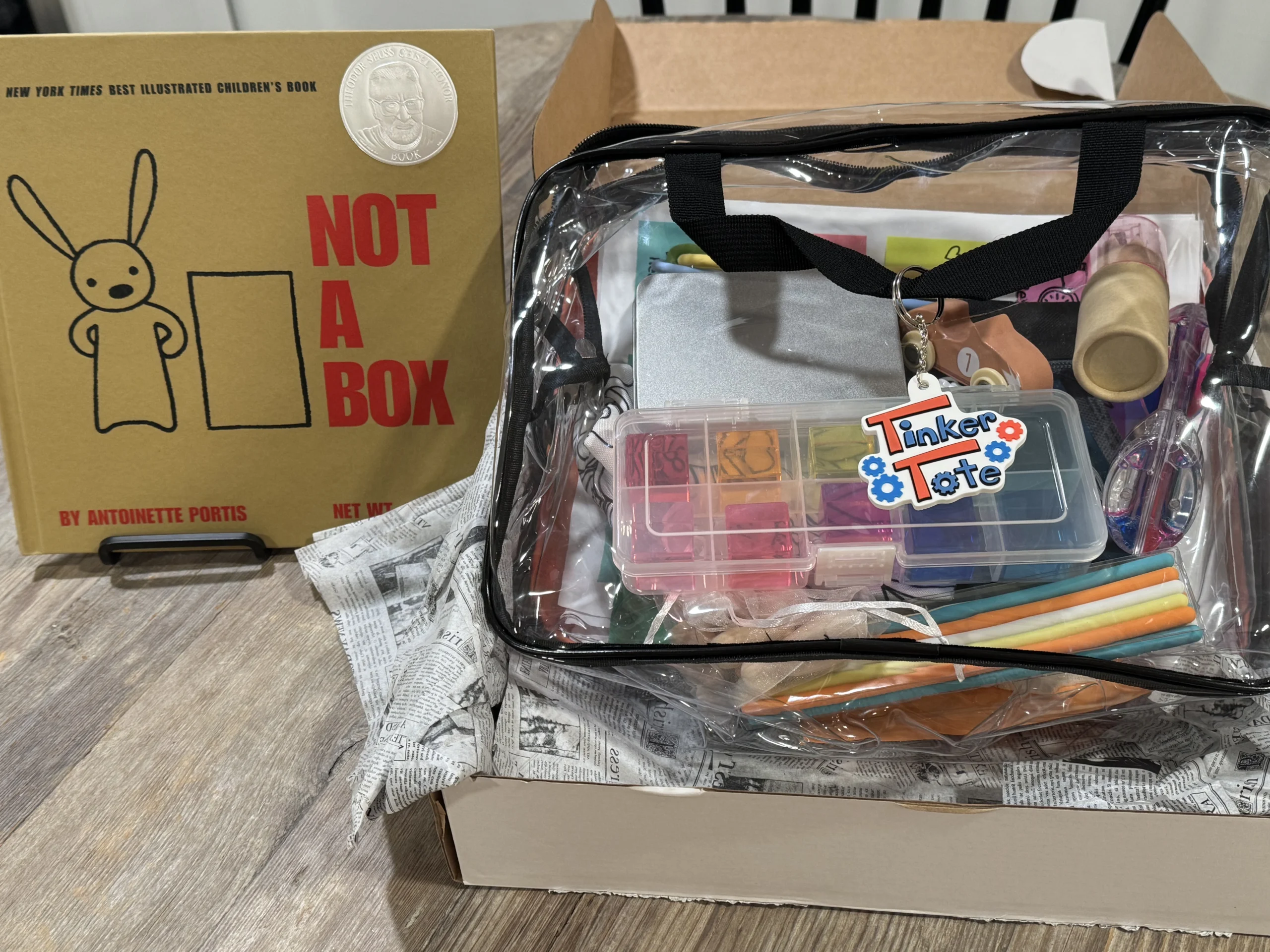
I have been writing about this since my kids were three and four and we carved a tinker lab out of a garage corner. I have written about keeping tinkering fresh, about setting up a tinker space as part of back-to-school materials, and about making and tinkering at home for families. CraftED’s TinkerTime resources grew out of that same belief: kids (and adults) need a protected window to try, notice, and try again before we ask them to produce something polished.
Tinkering is also already inside high-quality PBL, whether we name it or not.
When I ask teachers to prototype the final product before they run a project, that is tinkering. When a launch is a provocation instead of a presentation, that is tinkering. When students work through a benchmark, hit a wall, change the plan, and keep going, that is the same loop on the slide: trying → making → noticing → changing → trying again.
What it is not:
- A craft with a predetermined end product
- Free time with no purpose
- Only for elementary, STEM, or “creative” kids
- Something you need a dedicated lab to do
What it is:
- Curiosity in action
- Low-stakes practice of the same process students need inside a project
- A way to see how people think when the answer is not on the board yet
A tote, a basket, a table of recycled materials, a pile of leftover project scraps—any of those can hold the invitation. The materials are ordinary on purpose. The learning lives in what people do with them.
This is the first post in a short series on the Tinker Tote as a classroom and leadership tool. Next: why it belongs in PBL, not just in play.
*Tinker Tote credit: Your Literally, Co- Founders – Erin Donelson, Renee Houser
This piece was developed in collaboration with AI tools as a thought partner. All ideas, framing, and insights are my own, grounded in classroom experience, family tinkering, and the CraftED project-planning methodology.
About the Author: Jenny
