Project-Based Learning 101: What PBL Is, Why It Works, and How to Get Started
Project-Based Learning (PBL) is a powerful, student-centered teaching approach where learners tackle real-world problems and challenges through extended, authentic projects. Instead of simply memorizing facts, students build deep understanding by asking questions, collaborating, creating meaningful products, and presenting their work to real audiences, while hitting rigorous academic standards along the way. Whether you’re a teacher exploring PBL for the first time or a school leader looking to bring it to your team, CraftED can help you understand the fundamentals and take your first confident steps. With over 20 years of experience training educators, CraftED Curriculum makes PBL practical, accessible, and immediately usable in real classrooms.
What Is Project-Based Learning (PBL)?
The most common question I hear from educators is: “What exactly is PBL?”
There’s no single perfect answer because every school adapts it slightly; but high-quality PBL is a student-centered approach where learners investigate authentic, real-world problems and challenges through sustained projects. Students don’t just memorize content; they apply it to create meaningful work, often for a real audience.
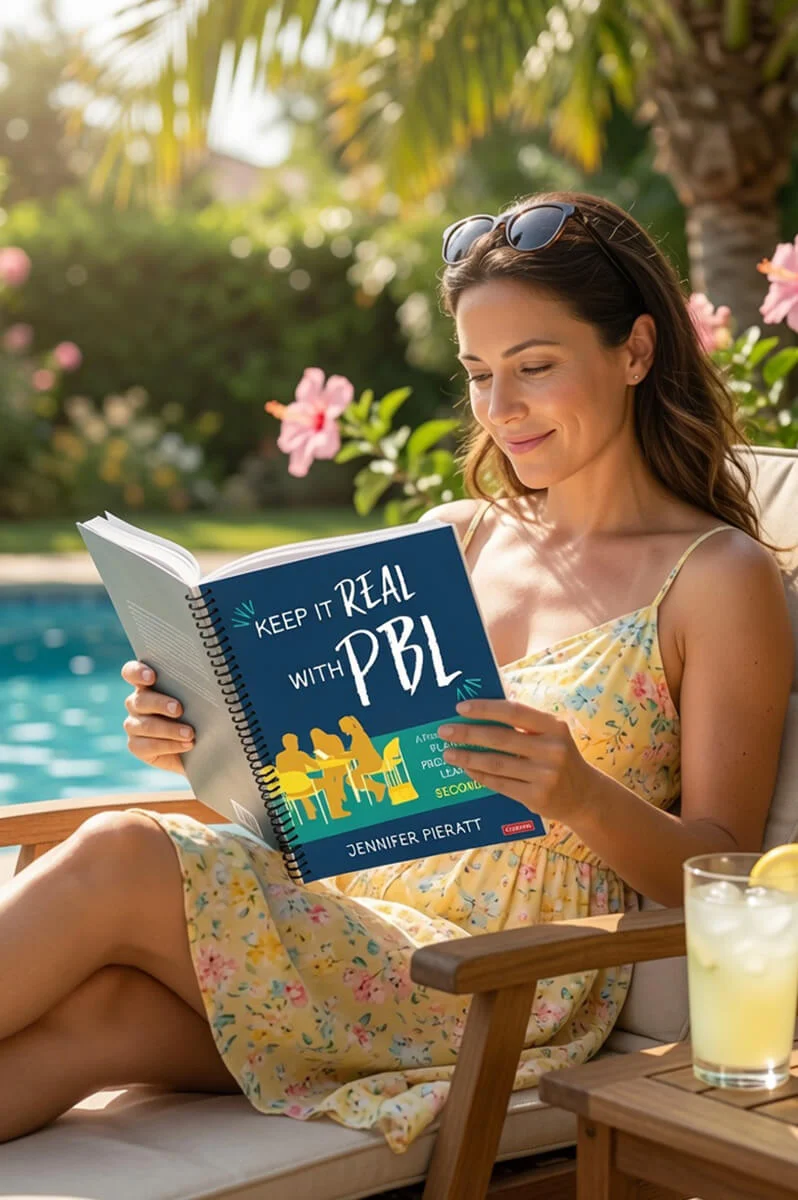
At its core, strong PBL is grounded in four non-negotiables (as I often share in workshops and my book Keep It Real with PBL):
- Standards-aligned: Projects are built around required academic standards from the very beginning.
- Authentic work: Students tackle relevant issues that matter to them, their community, or the real world.
- Assessment for learning: Frequent feedback, rubrics, self-reflection, and revisions help students grow throughout the project.
- 21st century skills: Collaboration, critical thinking, communication, creativity, and student agency are intentionally developed.
What PBL Looks Like in Action
- The teacher shifts from “sage on the stage” to facilitator and coach.
- Students take ownership, manage their time, and often learn alongside their teacher.
- Learning is flexible and responsive to student interests and community needs.
- The end result is a public product or presentation, not just another worksheet or PowerPoint.
PBL is not:
- A simple end-of-unit project, poster, or trifold board.
- Passive for teachers (facilitation is active and intentional).
- The same as Problem-Based Learning (PrBL) or Design
- Thinking (they pair beautifully but have distinct frameworks).
Why It Works
PBL leads to deeper learning, higher engagement, and better preparation for the real world. It’s especially powerful when paired with modern tools like AI for planning and scaffolding, while keeping the human elements (creativity, collaboration, and critical thinking) at the center.
Want examples? I’ve collected grade-level PBL units and ideas from real classrooms here. For even more depth, check out the first chapter of my book Keep It Real with PBL.
PBL vs. Traditional Projects: What’s the Difference?
| Aspect | Project-Based Learning (PBL) | Traditional Projects |
|---|---|---|
| Role of the Teacher | Facilitator & coach | Primary lecturer & director |
| Student Role | Active owners of learning | Passive recipients of information |
| When it happens | The project is the main vehicle for learning | Usually an add-on or end-of-unit activity |
| Assessment | Ongoing feedback, rubrics, reflection & revision | Mostly at the end (tests, final grade) |
| Authenticity | Real world problem or audience | Often classroom-only or teacher-assigned |
| Skills Developed | Collaboration, critical thinking, agency, communication | Content knowledge (mainly) |
| Public Product | Yes – presented to real audience | Rarely |
How to Get Started with PBL
Whether you’re an individual teacher ready to try PBL in your classroom or a school leader planning for your team, there’s a clear path forward that fits your needs and budget.


Your Journey to Success


Quick-Start Tips: Take Your First Steps This Week
You don’t need a full overhaul to begin. Try these practical entry points:
Craft a Strong Driving Question
Start with an open-ended, authentic question that sparks curiosity. Examples: “How can we design a school garden that supports both our community and the environment?” or “How can we amplify silent voices from history in our community?”
Tip: Brainstorm with students using a “Need to Know” list to make it even stronger.
Align to Standards
Work backward: Pick 2–3 priority standards, then design project ideas that naturally embed them. Map benchmarks and daily lessons back to the standards throughout.
Run a Small Pilot Project
Test PBL in one class, one subject, or a short 1–2 week unit. Emphasize student voice, collaboration, and a public product. Reflect on what worked and what to adjust next time.
Use AI as a Thought Partner
Speeds up planning with AI while keeping your expertise in the driver’s seat. Try my leveled Bloom’s prompts for creating driving questions, rubrics, scaffolds, and more.
These small steps are the same ones I recommend in workshops and e-courses. They build confidence quickly and often lead to bigger implementation.
FAQS
Getting Started with PBL
Training & Implementation
For Schools & Compliance
What they say about us
Case Studies
Providence Day School: Designing and Launching the Diploma in Entrepreneurial Studies
Case Study Client: Providence Day School, Charlotte, [...]
Brisbane School District: Launching Schoolwide PBL with Clarity and Momentum
Case Study Client: Brisbane School District (Brisbane Elementary & [...]
Willington Public Schools: Building a Year-Long PBL Foundation
Case Study Client: Willington Public Schools, Willington, Connecticut (PreK-8)Date: 2022–2024 [...]