Project-based learning has always been about real work — the kind that requires students to think deeply, struggle productively, and apply what they’ve learned in meaningful ways. But with AI tools flooding the education space, many PBL teachers are wondering: How do we integrate (or push back on) these new technologies without losing what makes projects powerful?
I recently attended Putting Evidence into Practice for Education and State Leaders, a webinar hosted by InnovateEDU with Stanford’s SCALE Initiative, Instructure, and a district superintendent. The conversation was refreshingly grounded in research instead of hype.
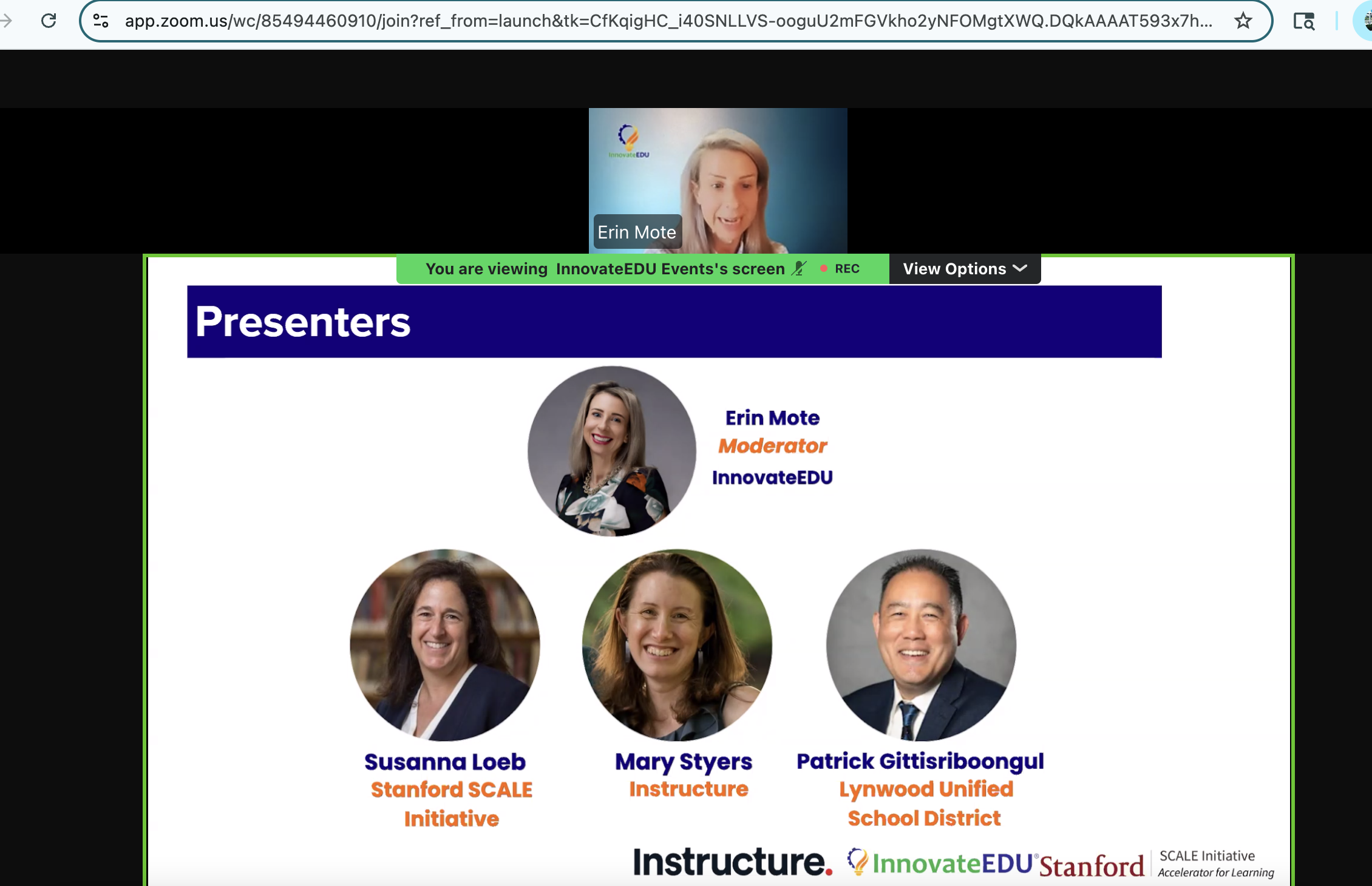
Here are the big ideas that stood out to me as a PBL curriculum designer — and why they reinforce the power of high-quality project-based learning right now.
1. “Think, Remember, Apply” Is Still the Goal
High-quality PBL naturally builds durable understanding through productive struggle. The panel kept coming back to this simple framework:
- Students think deeply about concepts.
- They remember what they’ve learned.
- They apply it in new, authentic contexts.
This is the heartbeat of strong PBL projects — the exact opposite of letting AI do the heavy lifting. It also echoes Vygotsky’s Zone of Proximal Development: the sweet spot where support meets challenge.
The question every PBL teacher should ask when considering AI: Does this tool support productive struggle, or does it remove it?
2. The Sobering Evidence on AI Tools
Before adopting any new AI platform, the panel recommended a crystal-clear question: “What learning or teaching problem does this actually solve?”
Stanford SCALE’s research makes this question urgent. Of the many AI programs they studied, only 7% demonstrated clear causal impact on student learning.
That’s a staggering number. It’s a reminder that shiny tools don’t automatically equal better outcomes — especially in project-based classrooms where the goal is deep application, not quick answers.
3. Return on Instruction > Flashy Tech
The panel introduced a term I loved: “Return on Instruction” (ROI).
Instead of just asking about financial ROI, we need to evaluate every tool by whether it actually improves teaching and learning. Does it align with your project’s driving question and learning goals? Does it preserve student agency and productive struggle?
My biggest takeaway as a PBL practitioner? Investing in teachers remains the highest-ROI move right now. We still don’t know enough about the long-term effects of most AI tools. Building teacher capacity — through strong planning, collaboration, and pedagogical expertise — is something you’ll never regret.
Ready to Go Deeper?
If you’re a PBL teacher or leader trying to navigate AI thoughtfully, I unpacked these ideas (plus more from the webinar) in a longer piece on Substack.
Read the full post here: “Putting Evidence into Practice: ‘Think, Remember, Apply’ and Why ROI on Instruction Matters in the AI Era”
I’d love to hear from you in the comments:
- How are you thinking about AI in your PBL projects?
- Have you found any tools that genuinely support (rather than shortcut) productive struggle?
This post was crafted with the help of Grok by xAI. I shared my raw webinar notes and takeaways, and Grok helped shape them into a clear, organized article.
Related Resources on CraftED Curriculum:
About the Author: Jenny
