When a team of educators sits down to talk about project-based learning, we often assume we’re speaking the same language. We’re not always right.
At Patiño School of Innovation, I faced a familiar challenge: a mix of new teachers and staff with widely varying experience and understanding of what high-quality PBL actually looks like. Without a shared definition, we risked inconsistent practice all year. I needed us operating from the same understanding, not a definition I handed down, but one the group constructed together.
So I designed a calibration activity.
The Why
Calibration is more than a professional learning exercise. It’s culture-building. When teachers help create the standard, they own it. The definition becomes a living North Star the team can return to throughout the year, especially when new staff join or when the work gets messy.
The How
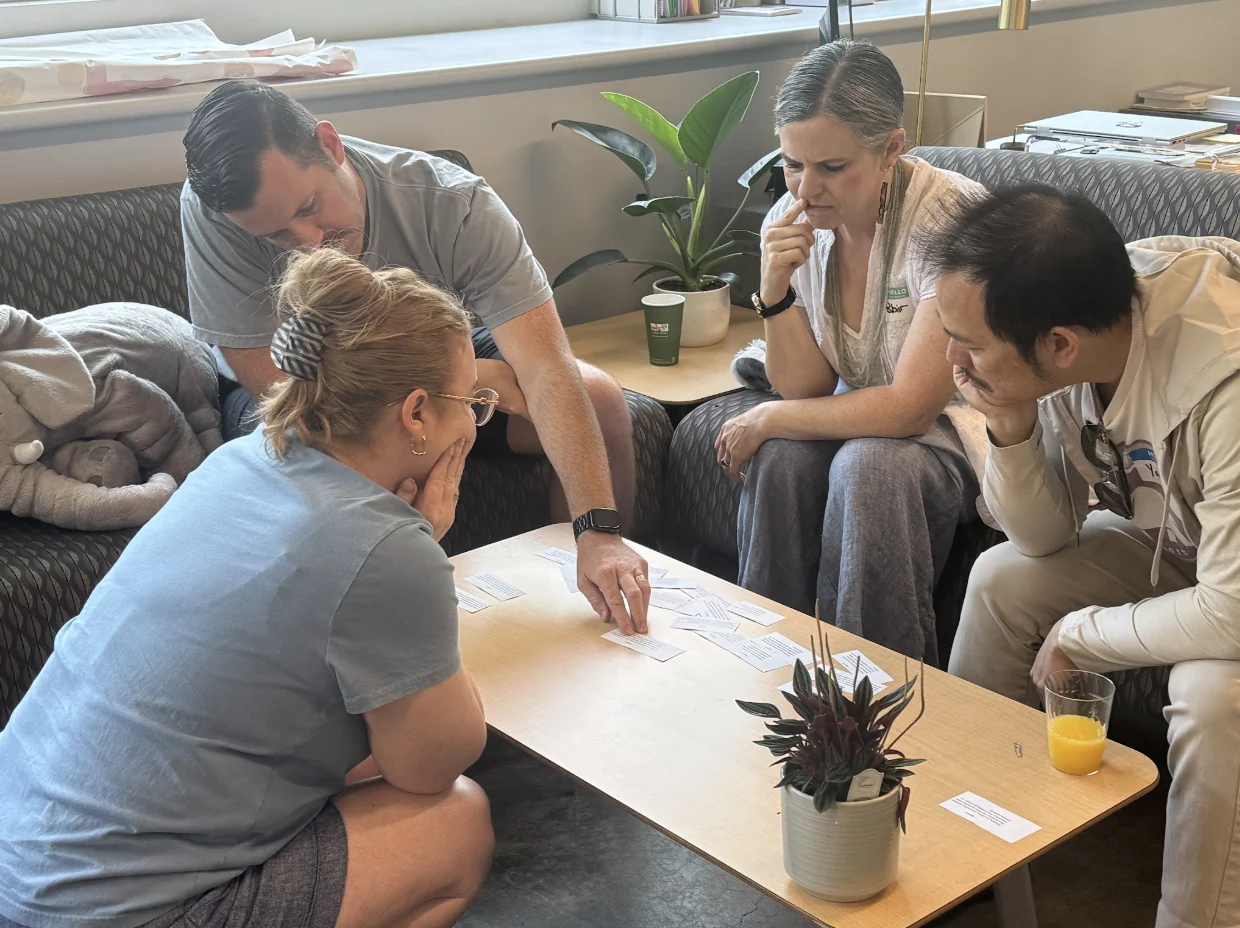
Teachers were divided into small groups and given twenty project cards. I used AI as a collaborative thought partner to generate the cards—authentic project ideas grounded in the Patiño community of Fresno. Each card was intentionally varied in quality.
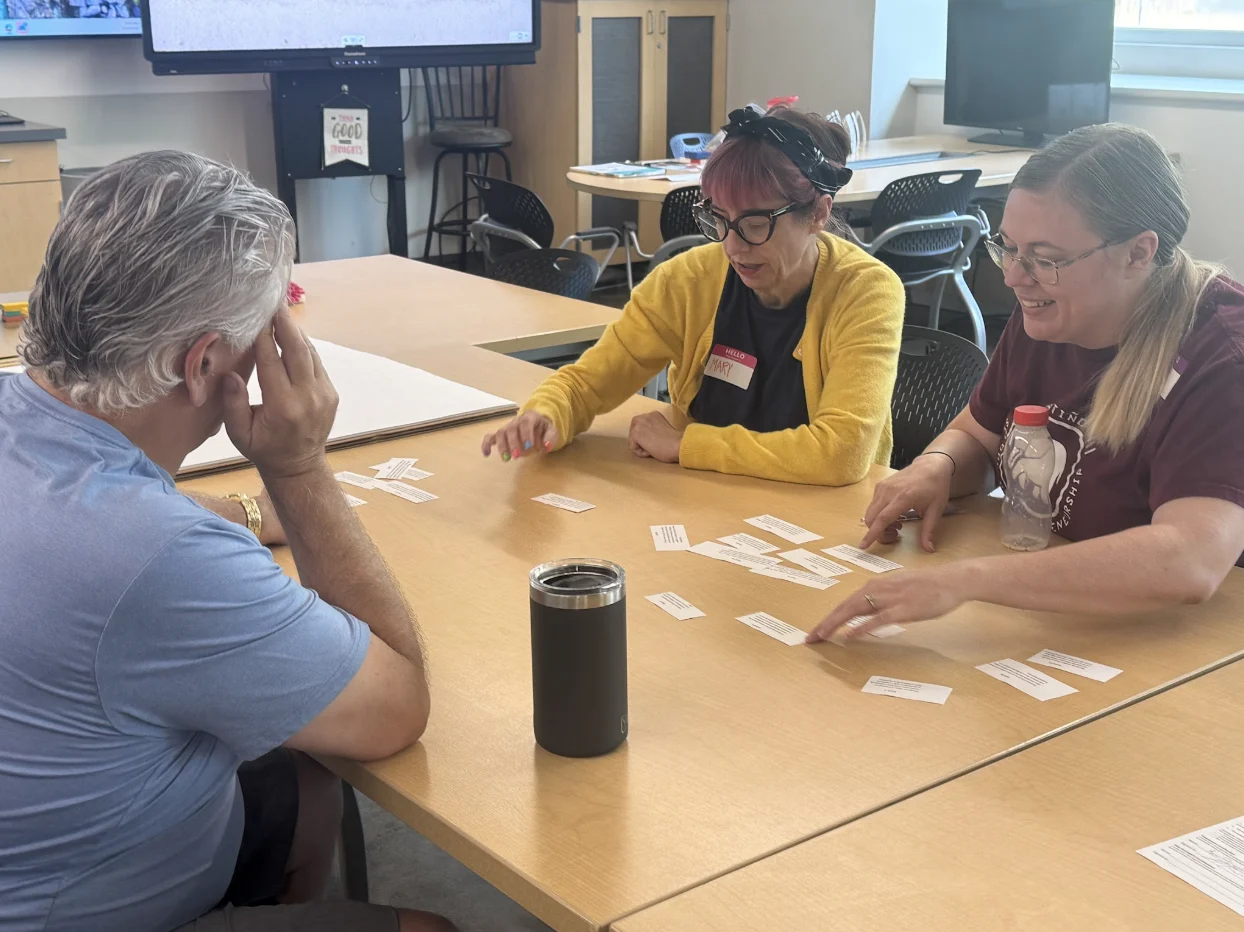
Groups sorted the cards along a continuum from high-quality PBL on one end to traditional learning on the other. No pre-packaged rubric. No expert definition imposed upfront. Just the cards, the continuum, and the people in the room.
 The What
The conversations that followed were richer than anything I could have scripted.
Teachers debated characteristics of quality: authenticity, student voice and choice, real-world impact, rigor, and the balance between teacher guidance and student agency. They pointed to specific cards and argued about what made one idea stronger than another. The energy in the room was electric.
We followed the sorting with a gallery walk so every group could see how others had arranged their continuum. Then we reconvened. I captured the characteristics teachers identified as markers of quality PBL on the whiteboard in real time. We discussed, clarified, and refined those ideas. Finally, we ranked and prioritized until the group landed on a calibrated definition that belonged to the people in that room.
Why This Approach Works
The resulting definition is unique to this community. It creates ownership because every voice shaped it. The process is intentionally a little messy—and that messiness is part of its power. Teachers leave with more than a shared definition. They leave with a shared language and a reference point they can revisit all year.
This is the kind of professional learning that sticks. It doesn’t just tell teachers what high-quality PBL is. It invites them to construct that understanding together.
If your team is starting the year with varying levels of PBL experience, consider beginning with something this simple: authentic local examples, a continuum for sorting, space for real debate, and the willingness to let the group’s own language become the standard.
The definition will be stronger for it. And so will the culture that grows around it.
About the Author: Jenny
