
A strong project idea is only useful if you can turn it into a teachable frame quickly.
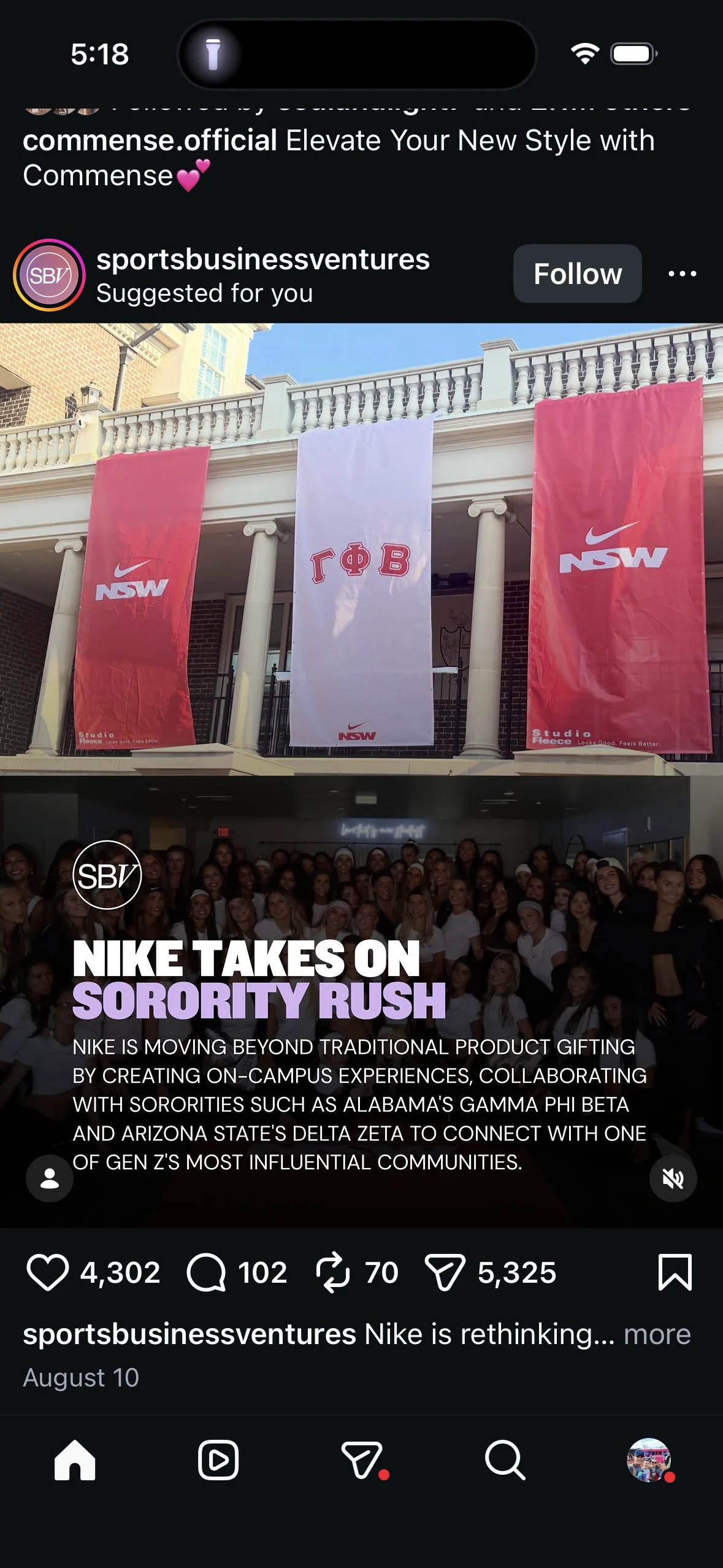
Last week I scrolled past a Nike × Gamma Phi Beta activation during sorority rush and a sharp analysis from @thedoctorofshopping that reframed the whole moment: Nike wasn’t “crashing” rush; it was coming back for a customer it used to own. That insight was pure gold for teaching consumer behavior and brand strategy.
Instead of starting from a blank page, I used AI as a thought partner to accelerate the design process while staying firmly inside the CraftED methodology.
The AI Prompt I Used for my Project Idea
I dictated this (exactly as it came out): “I have an idea for PbL. If I were still teaching entrepreneurship this would definitely be a case study I would follow for a project that would teach students about consumer behavior and why college kids buy. Can you include the steps for planning this project according to Crafted Curriculum methodology and include:
- Study of legacy branding
- Analysis of Nike and sorority rush
- A pitch to help revive a legacy brand, like what Nike did”
That single prompt produced a workable first draft of the project architecture in under five minutes: enduring understanding, driving question, three clear phases of student work, culminating experience, timeline, and assessment strands.
What AI Did, and What It Didn’t Do for my PBL plans
AI organized the structure.
I owned the pedagogy.
The tool helped me move quickly from inspiration to a coherent project skeleton. I then refined the language, connected standards, clarified the authentic audience, and designed the scaffolding myself. The thinking, the decisions about what students should learn and how they should demonstrate that learning, remained mine.
This is the workflow I now use (and recommend to teachers):
- Capture a real-world spark while the cultural heat is still high.
- Give AI your existing methodology + the specific student work you already envision.
- Treat the output as a structural draft only.
- Make every pedagogical decision yourself — standards, assessment, scaffolding, authenticity.
The Result
The finished project: Coming Back for the Customer: Legacy Brands & College Consumers is now available with a full overview, suggested timeline, and planning supports. You can find everything here:
Project: Coming Back for the Customer – Legacy Brands & College Consumers
This post was developed in collaboration with AI as a thought partner. All ideas, framing, and insights are grounded in my own classroom experience and the CraftED project-planning methodology.
About the Author: Jenny
