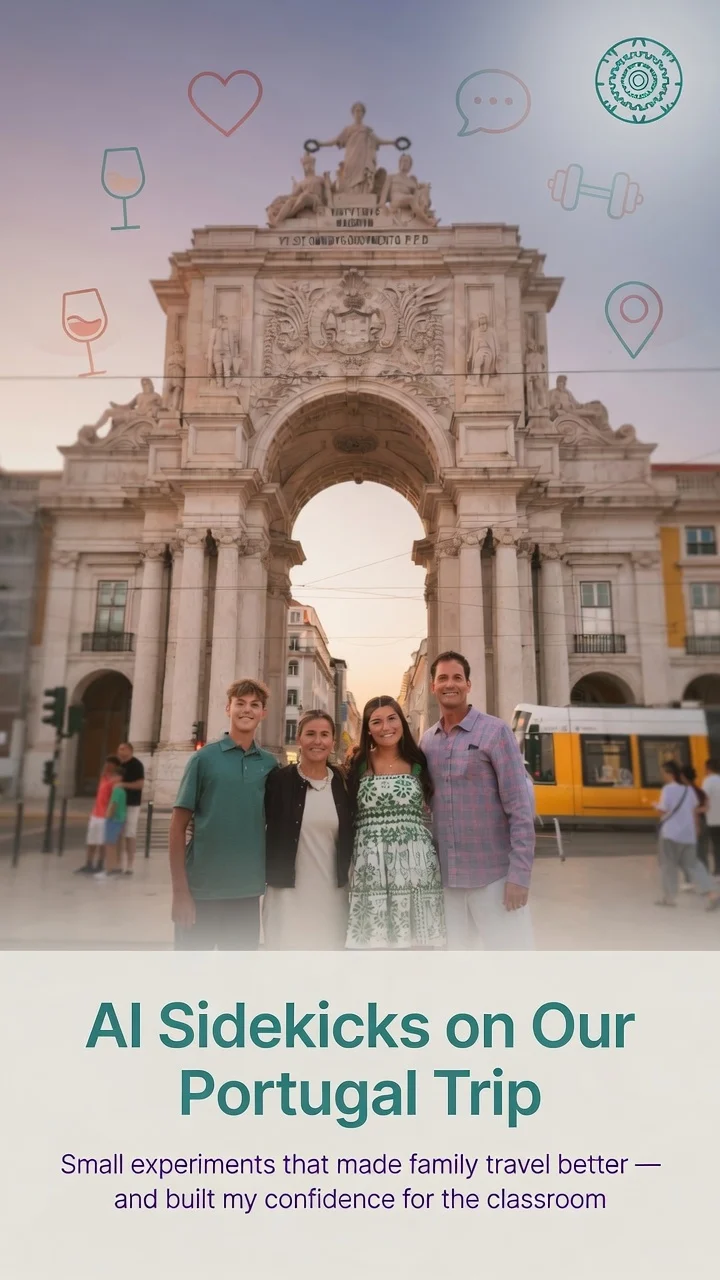
This summer our family spent a wonderful week in Portugal. We explored Lisbon’s Chiado neighborhood, training out to Cascais, and soaking up the food, light, and culture. It was restorative in every way. What I didn’t expect was how often I turned to AI for small, practical help that made the trip feel even more personal and less stressful.
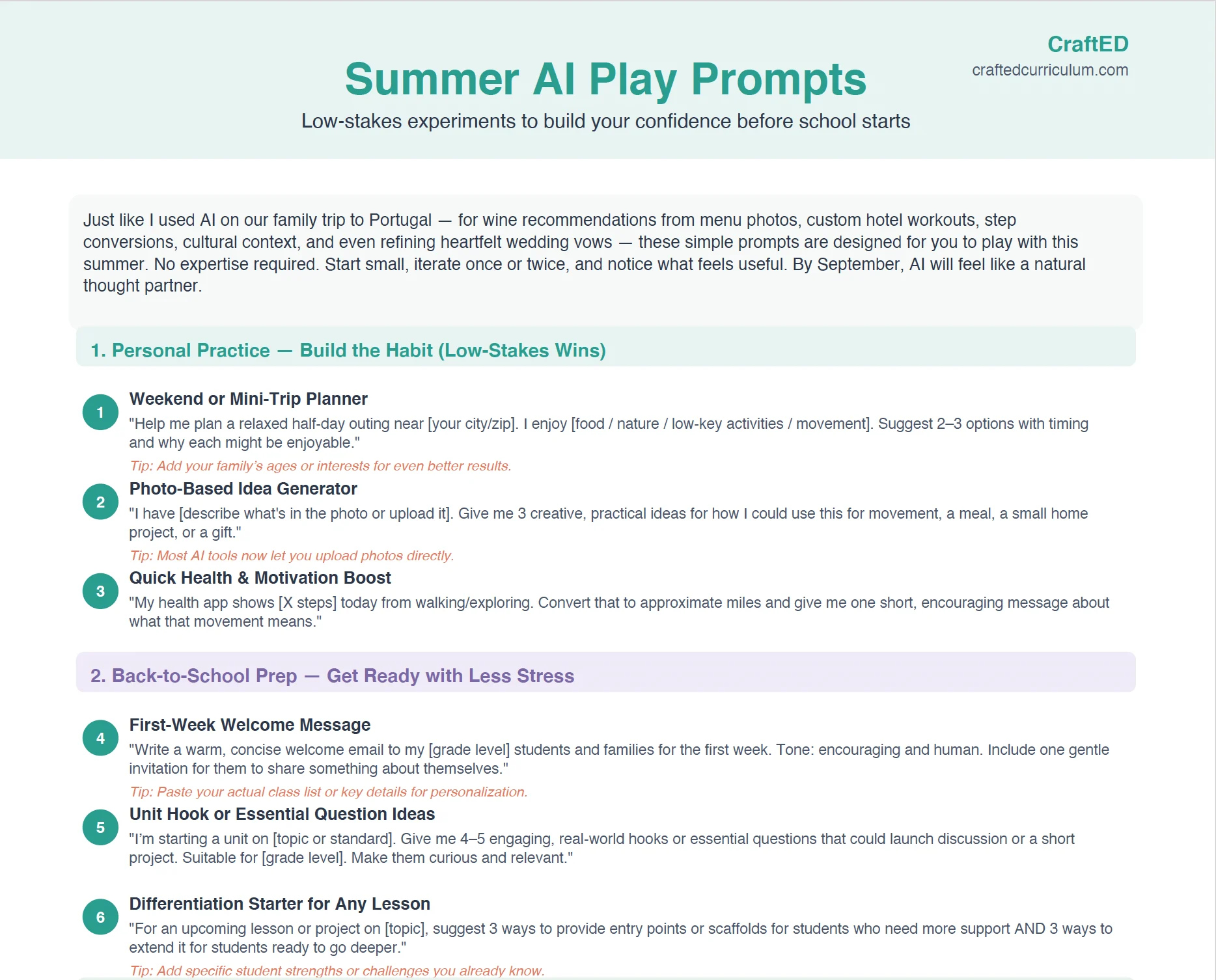
These weren’t high-stakes experiments. They were quick, playful uses that removed friction and added delight. I’m sharing them because I know many teachers are curious about AI but aren’t sure where to begin. The secret to building real comfort before the school year starts? Start small, in your actual life, right now.
Here are six ways AI quietly helped during our recent adventures:
1. Planning a Trip That Actually Fit Our Family
Instead of a generic itinerary, I described what matters to us: a soccer-loving teen daughter, a 14-year-old son who plays baseball, and two parents who want good food, wine, culture, and breathing room. AI suggested a loose plan that wove in a relaxed market morning, space for the kids to move, and a beautiful sunset spot in Cascais. It felt bespoke rather than borrowed.
2. Instant, Personalized Wine Recommendations
At one dinner the menu was in Portuguese. I uploaded a photo of the wine list and wrote: “I like crisp, dry whites like Sauvignon Blanc that pair with seafood or local cheese. Translate and suggest Portuguese options with short descriptions.” The recommendations were thoughtful and accurate. We discovered wines we loved and ordered with confidence instead of defaulting to the familiar.
3. Cultural Context When It Mattered
I wanted to be a thoughtful American traveler. A couple of simple questions about historical and current context helped me understand local perspectives and avoid clumsy assumptions. The result was richer conversations and a deeper sense of respect for the place we were visiting.
4. The Most Heartfelt Wedding Vows I’ve Ever Heard
Around the same time we attended a wedding where the couple had used AI to help refine their vows. They shared real memories and values, then asked it to make the language more personal and emotionally resonant. The vows that resulted were deeply moving…proof that AI can amplify human intention and emotion when we stay in charge of the heart of the message.
5. Quick Step-to-Mile (and Motivation) Conversions
Long days of walking Lisbon’s hills meant lots of steps on my health app. A simple prompt turned the number into approximate miles and a rough calorie estimate. It kept me motivated without any mental math or extra apps.
6. A Custom Hotel-Gym Workout in 30 Seconds
The hotel gym had limited equipment. I took one photo and asked AI to build a 25–30 minute full-body routine using exactly what was visible (dumbbells, treadmill, resistance bands). It gave me a smart sequence with warm-up and cool-down included. I actually did the workout and felt great afterward.
What these moments had in common
In every case I stayed the expert on what I needed and what felt right. AI handled the translation, calculation, brainstorming, or first-draft lifting. That left me more present with my family and more able to enjoy the parts of travel that matter most.
Why this matters for teachers right now
The fastest way to lower your own barrier with AI is to use it for things that already matter to you, like family plans, health, small creative projects, or yes, even wedding vows. Each small win teaches you how to prompt, how to iterate, and how to blend the tool’s strengths with your own judgment.
That practice pays off immediately in the classroom. You’ll feel more comfortable asking AI to:
- Generate tiered project options for different readiness levels
- Suggest discussion prompts or “what if” scenarios for a new unit
- Help draft parent communication or reflection templates
- Brainstorm authentic audiences or exhibition ideas for PBL
You don’t need a full AI strategy before August. You just need a few low-stakes reps so the tool feels familiar instead of foreign.
Your tiny challenge this week
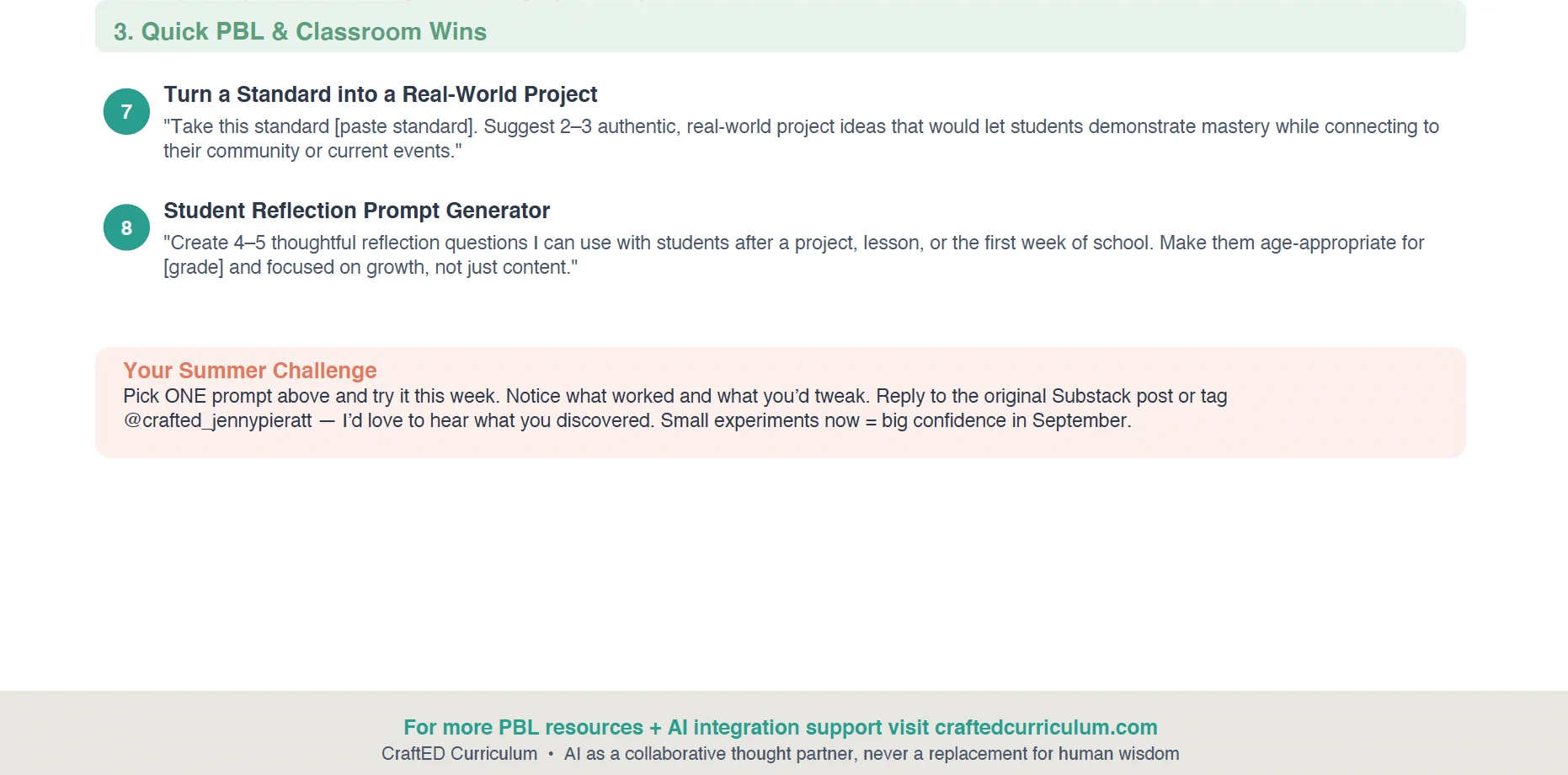
Pick one thing… anything… and try it! Plan a weekend outing. Refine a note you’ve been putting off. Take a photo of your desk or pantry and ask for ideas. The goal isn’t perfection. It’s momentum.
When you do, I’d love to hear what surprised you. These real-life stories are becoming some of the most useful “curriculum” we have for thoughtful AI integration.
Wishing you a restful end to summer and a confident start to the year ahead,
Dr. Jenny Pieratt
CraftED Curriculum
A quick note: I collaborated with AI (including Grok) as a thought partner while brainstorming and drafting this post, but the stories, reflections, and all recommendations here are grounded entirely in my own experiences and professional judgment.
About the Author: Jenny
