The world does not exist in neat and tidy compartments, so why should the subjects our students study in school? Can you imagine a work day in which you showed up and your schedule was set:
8:00-9:00 read email, only respond to messages with content related to math
9:00-10:00 go to meeting, but only a meeting related to science
10:00-11:00 think creatively for an hour, so long as you complete that assigned task given by your boss
11:00-12:00 mandatory lunch, you may not have access to your office or working materials
12:00-1:00 read a book, but not one that is necessarily of interest to you
1:00-2:00 conduct research, but only about the topic your boss provided
2:00-3:00 attend a lecture about how to better communicate in writing
3:00-4:00 follow an assigned workout, but DO NOT make connections to anything earlier in your day
4:00-5:00 write email, only about messages related to events
It’s laughable, right? And yet in most places our schools are set up according to divided schedules, department hallways, and separate classrooms. Maybe you aren’t in a position to disrupt the entire system in which you exist, but perhaps you can shake it up a little bit through the design and facilitation of an interdisciplinary project.
The What
Interdisciplinary projects adhere to the following traits:
- Integrate two or more subject areas
- Students learn content in multiple subject areas, simultaneously.
- Ask students to make connections across content areas
- Require students to apply connections across content areas in a final product
- Are often planned and facilitated by more than one teacher
- Hopefully connect to the real-world
- Are appreciated by students because they can better focus on fewer tasks, and make connections with ease
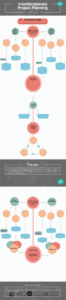 The How
If you are working with a colleague to design and facilitate an interdisciplinary project it is helpful to identify a pilot and co-pilot for this adventure. Neither teacher (nor content area) is more or less important than the other, but it is helpful to have a “driver” that can identify a starting point for your work. For example, when I taught humanities I always started with the history content, as it was easy to have a historical context to think about what ELA connections I could embed. This process will help you land on a main idea, then specific content and skills to backwards map your deeper learning experience.
Need more?
Click here to download CraftED’s interdisciplinary-project-planning guide to help you through this process. Be sure to visit our Pinterest board “interdisciplinary projects” and search our teaching materials by your “collaborative” personality.